THE MOVEMENT

Hanging by a thread is an awareness and engagement movement that aims to broaden understanding of the presence of microplastics in our daily lives, particularly those released by clothing made from synthetic fibres, and encourage more conscious choices. Microplastics are already present in the environment and can reach the human body through different routes of exposure, while science continues to investigate the long-term effects. This is an issue that calls for attention to both the present, by taking care of our health, and the future, by protecting the environment. That is why our choices matter. The movement encourages us to better understand the materials we use, choose natural fibres whenever possible and rethink our consumption habits. Small changes can help reduce avoidable sources of microplastics and encourage a more conscious relationship with what we wear. Taking care of what surrounds us today also means taking care of our health and the environment we want for the future.
What exactly are microplastics?
Microplastics are very small fragments of plastic measuring 5 millimetres in diameter or less. They have become an environmental and health concern, with studies detecting them across different ecosystems, in the food chain and in the human body. Science is still investigating the long-term effects of this exposure. Reducing avoidable sources is one way to protect the environment and our well-being. That is why our choices matter. This movement encourages us to better understand the materials we use, choose natural fibres whenever possible and rethink our consumption habits. Small changes can reduce the amount of microplastics released into the environment and encourage a more conscious relationship with what we wear. The choices we make today help shape what we leave behind for the future.
What does your clothing leave behind?
Every time clothes made from synthetic fibres such as polyester are washed, they release microplastic particles that can enter our bodies and the environment, with serious consequences for human health and the planet. Made from fossil-based materials, synthetic textiles — primarily polyester, followed by polyamide, nylon and acrylic — are associated with approximately 35% of the primary microplastic pollution entering the oceans. Throughout their life cycle, particularly through use, wear and washing, tiny fibres are shed into household dust, air and water. Some pass through wastewater systems and reach rivers and oceans, adding to microplastic pollution in aquatic ecosystems and the food chain.

ESTIMATED DAILY MICROPLASTIC INGESTION COUNTER*

0.6614935
g
particles ingested per hour
0.00673168
g
particles ingested per minute
0.0002833077
g
particles ingested per second
* It is estimated that each person may ingest approximately 5g of plastic per week, equivalent to around 0.7 g per day. The counter presents a mathematical projection for awareness purposes, based on this ingestion estimate,
PLASTIC PARTICLES INGESTED PER PERSON IN 2026*
* From 1 January 2026
THIS IS EQUIVALENT TO:
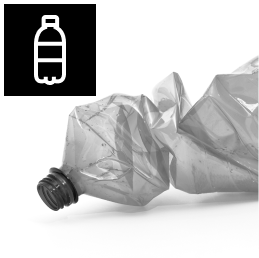
An empty 500 ml plastic bottle weighs approximately 10 g*
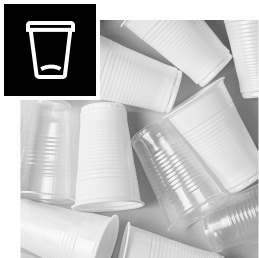
A disposable plastic cup weighs approximately 2 g*
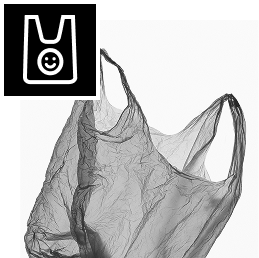
A supermarket plastic bag weighs approximately 5 g*
A small LEGO piece can weigh approximately 3 g*
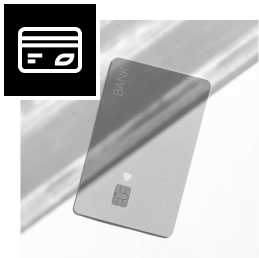
A bank card weighs approximately 5 g*
Um cartão bancário pesa aproximadamente 5 g*
A bank card weighs approximately 5 g*
A small LEGO piece can weigh approximately 3 g*
A supermarket plastic bag weighs approximately 5 g*
A disposable plastic cup weighs approximately 2 g*
An empty 500 ml plastic bottle weighs approximately 10 g*
* Estimated average weight of each item, which may vary depending on material, size, model and brand, based on technical references and standards.

SCIENTIFIC REFERENCES

Human exposure to PM10 microplastics in indoor air.
YAKOVENKO, Nadiia; PÉREZ-SERRANO, Lucía; SEGUR, Théo; HAGELSKJAER, Oskar; MARGENAT, Henar; LE ROUX, Gaël; SONKE, Jeroen E. Human exposure to PM10 microplastics in indoor air. PLOS ONE, v. 20, n. 7, e0328011, 2025. Publicado em 30 de julho de 2025. DOI: 10.1371/journal.pone.0328011 (https://journals.plos.org/plosone/article?id=10.1371/journal.pone.0328011) 
The study showed that the air we breathe is also an important source of microplastic exposure, particularly indoors, where people spend much of their time. By analysing inhalable particles measuring 1 to 10 μm, the researchers estimated that an adult may i nhale around 68,000 microplastic particles per day indoors — 100 times more than previous estimates. The findings suggest that inhalation may be an underestimated route of exposure, extending concern beyond microplastics ingested through food and water

Microplastics and Nanoplastics in Atheromas and Cardiovascular Events.
MARFELLA, R.; PRATTICHIZZO, F.; SARDU, C.; et al. Microplastics and Nanoplastics in Atheromas and Cardiovascular Events. New England Journal of Medicine, 2024. DOI: 10.1056/NEJMoa2309822. (https://www.nejm.org/doi/10.1056/NEJMoa2309822) 
This multicentre observational study investigated microplastics and nanoplastics (MNPs) in carotid artery plaques from 304 patients undergoing surgery. Among the 257 patients followed forapproximately 34 months, 58.4% had polyethylene in their plaques and 12.1% also had PVC. Patients with these particles had a higher incidence of heart attack, stroke or death during the follow-up period,indicating a possible association between the presence of MNPs and cardiovascular events
Microplastics in the Olfactory Bulb of the Human Brain.
AMATO-LOURENÇO, L. F.; DANTAS, K. C.; JÚNIOR, G. R.; et al. Microplastics in the Olfactory Bulb of the Human Brain. JAMA Network Open, v. 7, n. 9, e2440018, 2024. DOI: 10.1001/jamanetworkopen.2024.40018. (https://jamanetwork.com/journals/jamanetworkopen/fullarticle/2823787) 
Led by researchers from FMUSP, the study identified microplastic fibres and particles in the olfactory bulbs of 8 of the 15 people examined in autopsies. The findings suggest that inhalation may be a route through which these particles enter the brain and point to the need for further research into their possible effects. Polypropylene, used in clothing, packaging and bottles, was the most frequently detected plastic.
Primary Microplastics in the Oceans: A Global Evaluation of Sources.
BOUCHER, J.; FRIOT, D. Primary Microplastics in the Oceans: A Global Evaluation of Sources. Gland: IUCN, 2017. DOI: 10.2305/IUCN.CH.2017.01.en.  (https://iucn.org/resources/publication/primary-microplastics-oceans) 
The IUCN report examines the sources of primary microplastics entering the oceans and quantifies their contribution to marine pollution. It identifies major sources including tyre wear, synthetic fibres released when clothes are washed and particles from c oatings. The findings show how microplastic pollution is linked to everyday activities and different production sectors, with potential consequences for marine ecosystems and economic activities.
Estimation of the mass of microplastics ingested: A pivotal first step towards human health risk assessment.
SENATHIRAJAH, K.; ATTWOOD, S.; BHAGWAT, G.; et al. Estimation of the mass of microplastics ingested: A pivotal first step towards human health risk assessment. Journal of Hazardous Materials, v. 404, 2021. DOI: 10.1016/j.jhazmat.2020.124004.  (https://pubmed.ncbi.nlm.nih.gov/33130380/)  
The article expands on and reviews estimates of the mass of microplastics ingested by humans, drawing on available data from different foods, beverages and other sources of exposure. Its main purpose is to establish a quantitative basis for future health r isk assessments, while noting the substantial variation and gaps that remain in the data. It is an important reference for understanding how ingestion estimates are calculated.
No Plastic in Nature: Assessing Plastic Ingestion From Nature to People.
WWF. No Plastic in Nature: Assessing Plastic Ingestion From Nature to People. Junho de 2019.  (https://yourplasticdiet.org/files/downloads/plastic_ingestion_press_singles.pdf) 
Commissioned by WWF, the study brings together existing research to estimate how much plastic may enter the human body through food, beverages and water. It estimated that a person could ingest, on average, around 5 grams of plastic per week. The report he lped illustrate the scale of microplastics in the food chain and brought human exposure into a discussion that had largely focused on environmental pollution.

MEET OUR SUPPORTERS

Brazilian Association of Corriedale Sheep Breeders (ABCC)
Brazilian Association of Australian Merino Sheep Breeders (ABCMA)
Brazilian Association of Ideal Sheep Breeders (ABCI)
Brazilian Association of Naturally Coloured Sheep Breeders (ABCONC)
Brazilian Cotton Growers Association (Abrapa)
AYRAA ECO FRIENDLY

MEET OUR SUPPORTERS

AYRAA ECO FRIENDLY
Brazilian Association of Corriedale Sheep Breeders (ABCC)
Brazilian Association of Australian Merino Sheep Breeders (ABCMA)
Brazilian Association of Ideal Sheep Breeders (ABCI)
Brazilian Association of Naturally Coloured Sheep Breeders (ABCONC)
Brazilian Cotton Growers Association (Abrapa)